
Our animals come in four sizes: Small, Medium, Large and Extra large. S is the smallest of that animal and XL is the largest. Each size is one step up from the one before.
A size belongs to the animal it describes. A Small giraffe is the smallest giraffe, a Small lion is the smallest lion, and the two are not the same height. We do not publish centimetre measurements yet, so here are three ways to compare by eye.
1. Read the row
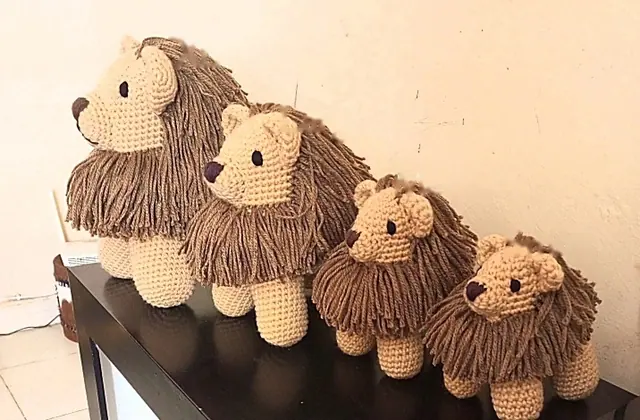
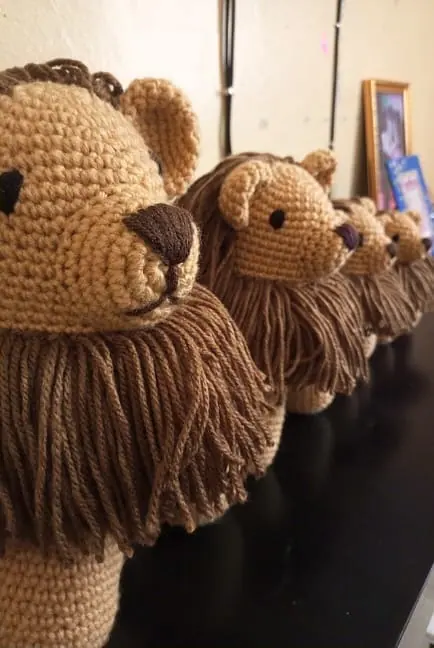
Four crocheted lions with brown yarn manes stand in a row against a cream wall. The one at the left is the largest and the one at the right is the smallest. Each step is easy to see without being huge, and that is the gap between neighbouring sizes.
The close view at the top of this page shows the same kind of row from the side. The nearest lion fills the frame and the others shrink away behind it.
2. Use a person as a scale
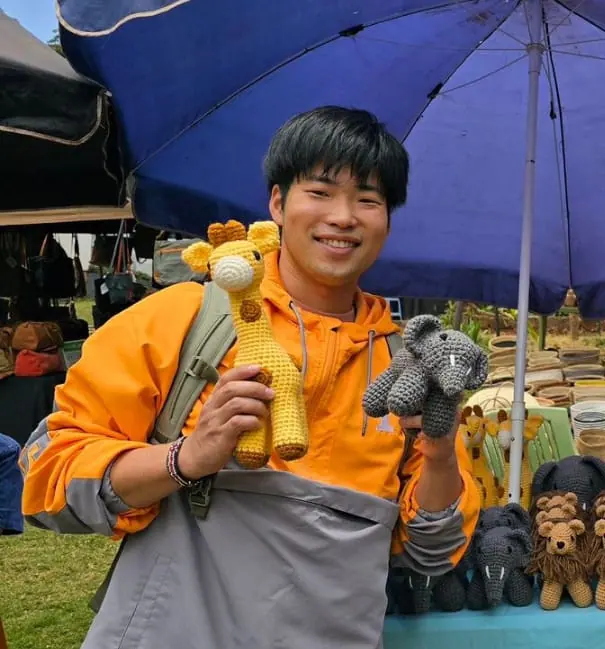
A young man in an orange jacket holds a yellow giraffe in one hand and a grey elephant in the other, both lifted to chest height. Photos with people in them are the best guide we have.
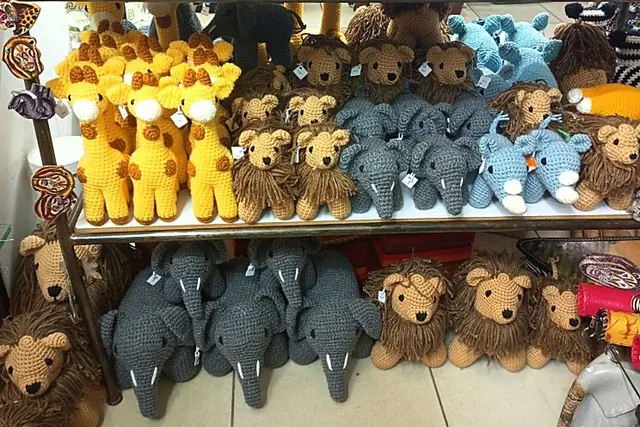
Ask yourself whether you want an animal that sits in one hand like these, or one that you hug with both arms, like the large lion on our home page.
3. Think about where it will live
- A smaller size suits a shelf, a desk or a bag.
- A larger size suits a sofa, a bed or a gift that should stand out.
- Ordering a group? Pick sizes that stand next to each other, like the lions in the row.
A quick test helps. Picture the animal beside something you know well, such as a cushion, a school bag or a child's own arms. Then decide whether you want it smaller than that, about the same, or bigger.
Not sure? Tell us who the animal is for and where it will sit, or send a photo of the space, and we will suggest a size.
Four sizes mean you rarely have to guess alone. Pick the step that looks right in the photos, and we will check it with you on WhatsApp before anything is sent.