
Mikono is the Swahili word for hands. One hand is mkono, so mikono is the plural: many hands. It is a fitting name for a business where every animal is crocheted by hand.
Mikono Creations was founded in 2019 in Nairobi by Leah Maina. Today the business supports 25+ women through this work. Each animal in the shop is made one stitch after another, with a hook and yarn.
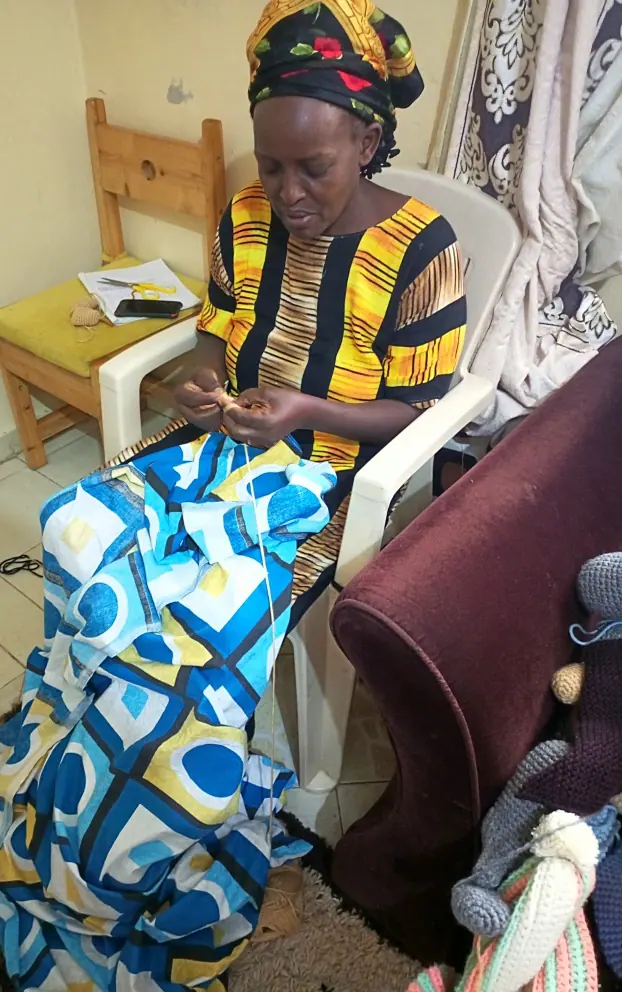
The photo at the top of this page shows what that looks like. A woman in a yellow and black top and a kitenge skirt sits on a chair and crochets, with a finished animal waiting beside her.
Hands at work in two more photos
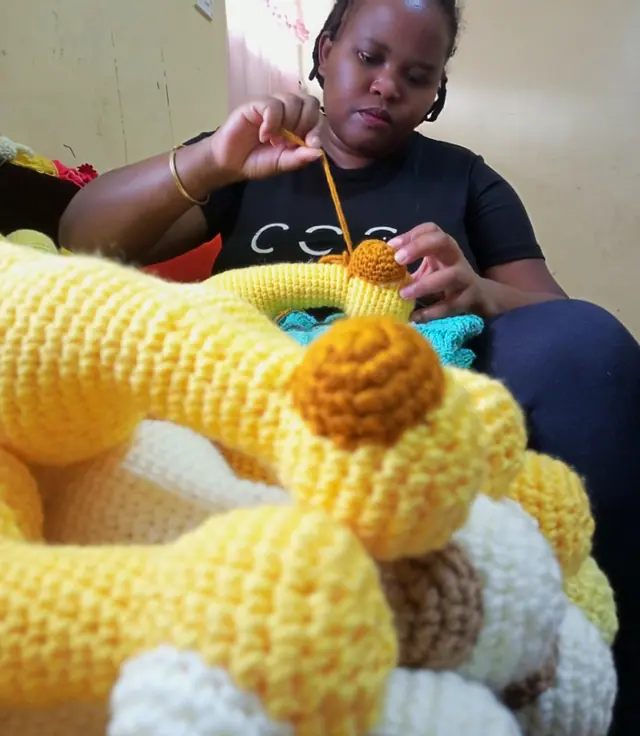
In the first, a woman in a black t-shirt crochets with a hook while yellow and cream giraffe pieces fill the front of the frame. Her eyes are on the stitch. The pieces in the foreground are not yet one animal.
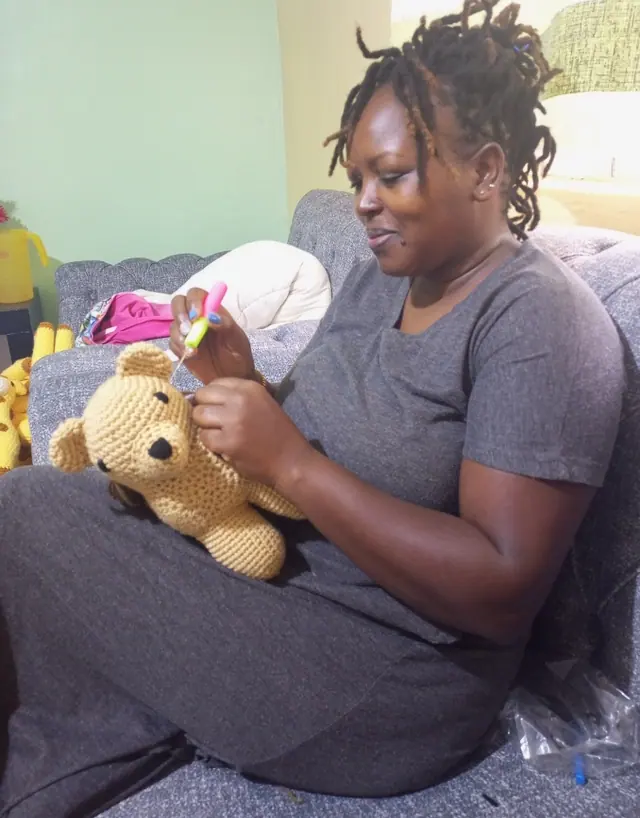
In the second, a woman with locs sits on a grey sofa with a tan crocheted bear in her lap. She is sewing its face by hand. Crochet makes the shapes, and sewing places the details that give each animal its look.
Swahili is spoken across Kenya and is one of its two official languages, alongside English, so the name will be familiar to most people here.
Why we use the word hands on this site
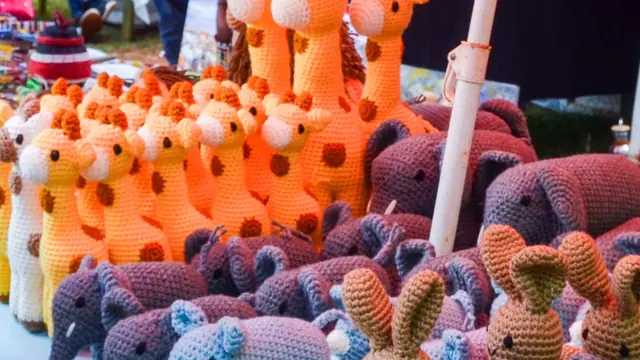
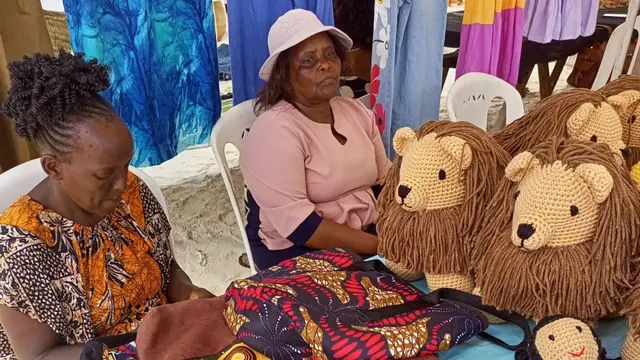
We say hands on purpose. When a page tells you a lion has a long yarn mane, a person gave it that mane. When you see a row of giraffes that look alike, each one still passed through someone's fingers.
The name also keeps us honest. If we cannot show the hands behind a claim, we try not to make it. That is why some pages on this site say that a detail is still being confirmed, instead of guessing.
What the name does not tell you
A name cannot say how a particular animal is made. For that, the journal has posts that follow the work: a lion getting its mane, giraffes going from loose pieces to a family, and the yarn itself. The makers page shows the women at work.
So when you hold one of our animals, turn it over and look at the stitches. Each row went in under somebody's hands, and the name is simply the truth about that.