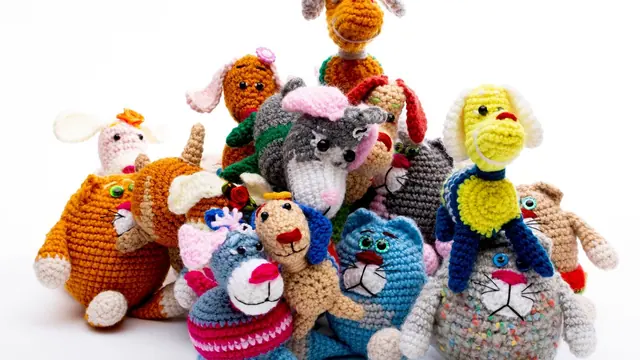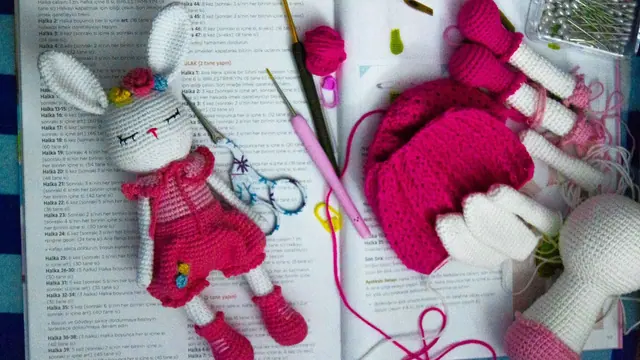

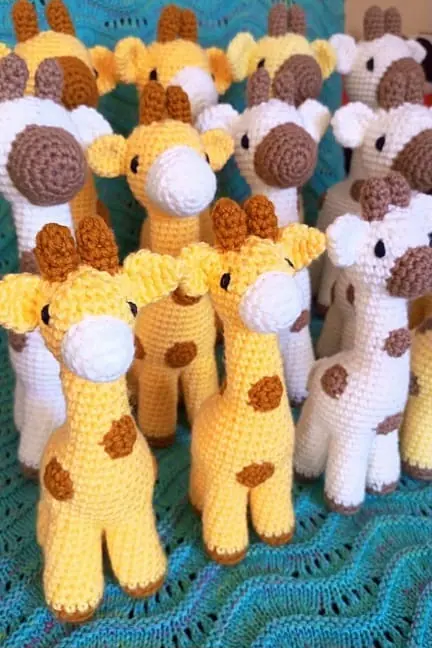
Look closely at a group of our giraffes. The yellows are close but not identical, and the cream ones are not all the same cream.
What the photos show
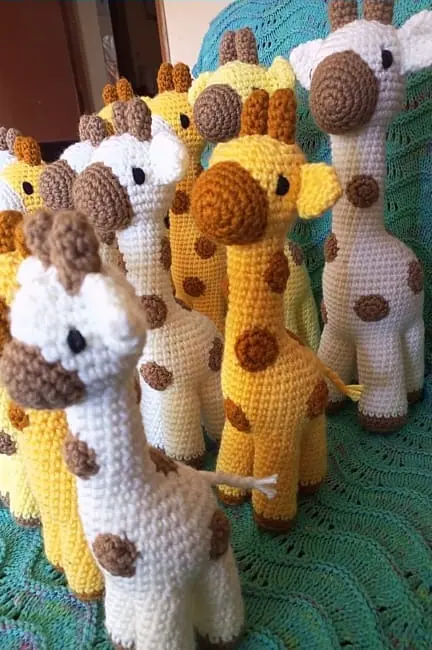
- In the herd, yellow and white giraffes with brown spots, muzzles and horns stand close together.
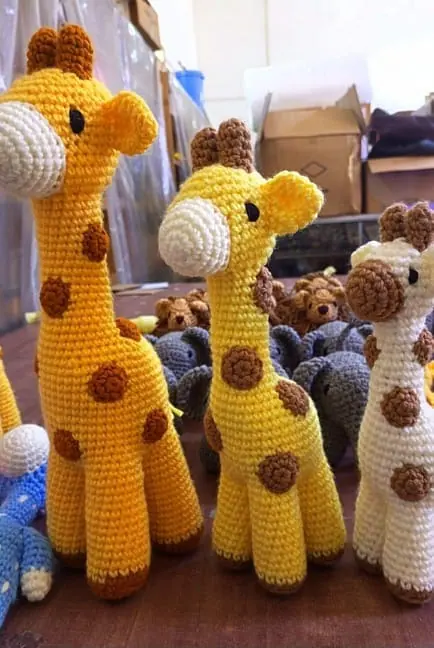
- In the workroom, three giraffes in a deep golden yellow, a lemon yellow and a cream stand in three heights.
- On a market table, four long cats lie in orange, mint, blue and pink, each in one bold colour.
Why colours can differ
Anything made by hand from yarn varies a little. Different balls of yarn can be slightly lighter or darker, and every animal is crocheted on its own. Photos add their own differences: daylight, shade and a phone camera all change a yellow.
Screens change colour too, so a shade on your phone may not match the animal exactly.
One animal, several colours
Each animal page shows a photo for every colour it comes in. The elephant, for example, has grey, caramel brown, slate blue, lavender and dusty purple. Some pairs look alike on a small screen, such as grey and dusty purple, and a message to us settles it quickly.
Colour is not only the body
Look for the second colour. Our cats have a coloured ear tip and some carry a small bag. Our monkeys have a face and ears in a second colour, and the hippo in our photos wears a dress with a multicoloured hem. Mention these details when you ask, so that we can answer about the whole animal.
How to ask for the colour you want
- Use the colour filter in the shop. It groups colours into families such as yellow, grey and brown.
- Open the animal and look at the photo for each colour it comes in.
- If an exact shade matters, say so in the order form notes, or message us before you order.
Some animals, such as the cats, sharks and monkeys, are shown only in group photos. For those, the colour is confirmed with you on WhatsApp, and the order list says colour to confirm.
A row of slightly different yellows is nothing we are hiding. It is what hand crocheted animals look like when you put them side by side.