
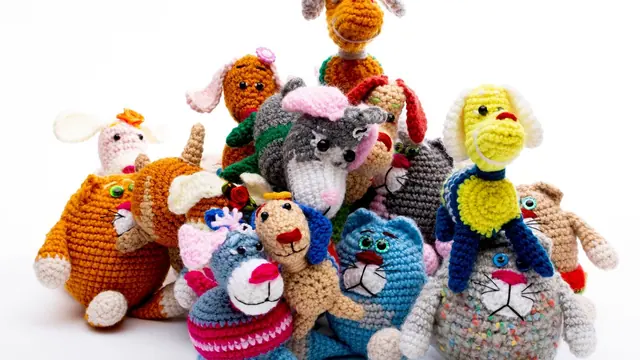
You may have seen the word amigurumi in a craft video or a pattern book. It is Japanese. It names a style of making small stuffed creatures from yarn. This post explains the word, the style, and why we usually say crocheted animals.
Taking the word apart
Ami means crocheted or knitted. Kurumi means wrapping. The word is linked to nuigurumi, a Japanese word for a sewn stuffed doll. So amigurumi points to a stuffed shape made with yarn.
Amigurumi are usually crocheted, but knitting works too. They have been made in Japan for decades. The style spread to many other countries in the early years of this century. Some people use the word for knitted creatures too. Most of the time, though, they mean a crocheted one.
How the style is made
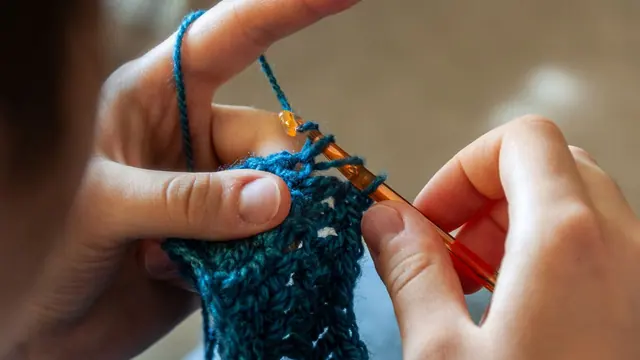
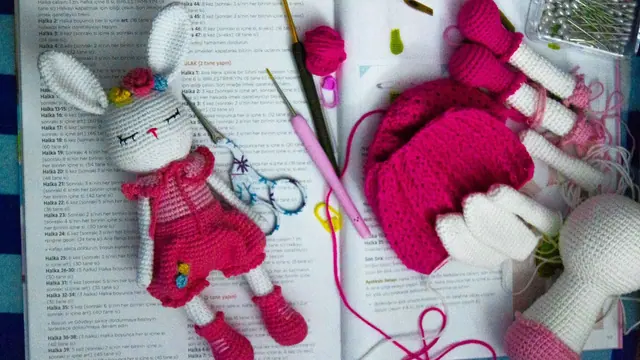
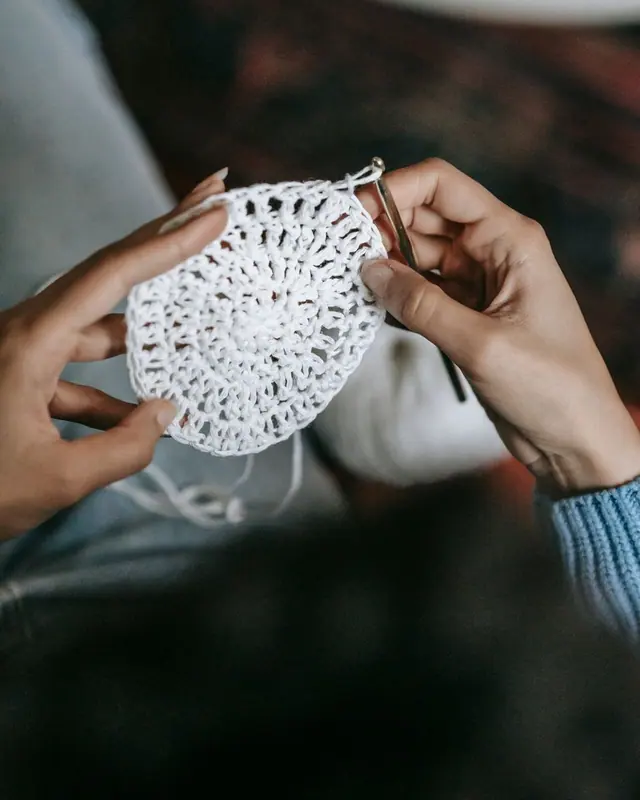
A few habits set it apart. The body is worked in a spiral, so there is no seam up one side. The hook is small for the yarn and the stitches are tight. Heads, limbs and ears are often made as separate parts and joined.
Why make the stitches tight? Loose stitches leave small gaps. Filling pushes through them, and the animal looks lumpy. Tight stitches also help it keep its shape after months of handling.
When you look at one, check for these:
- Tight, even stitches with no gaps.
- Parts that were made separately and joined.
- Small details, like noses and faces, added last.
- A shape that holds up when you squeeze it gently.
Are ours amigurumi?
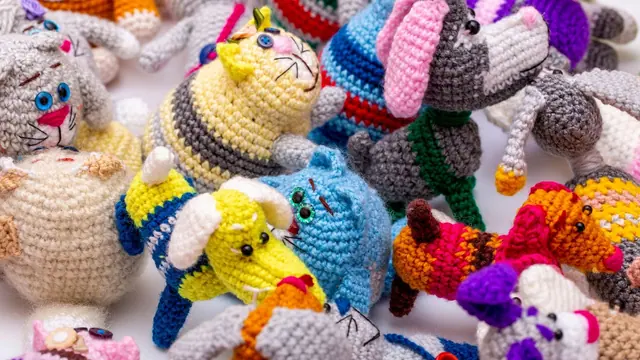
Our animals are crocheted, shaped in rounds and filled. People who know the word may use it for them. On this site we use plainer names: crocheted animals and stuffed animals. They say the same thing, and you do not need a dictionary. We use the word here once, so you know what it means when you meet it.
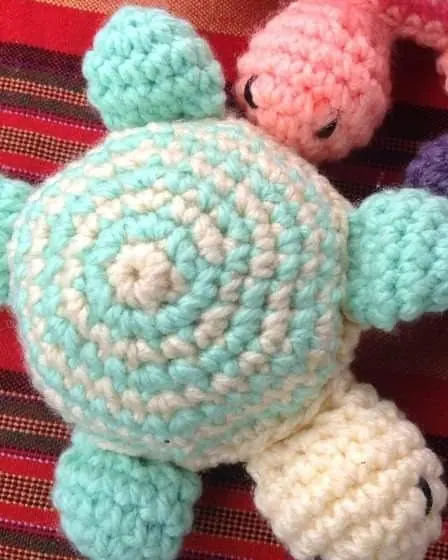
To see the idea in a small shape, look at our turtle. Its shell winds round in a spiral of stripes. Our octopus has a ruffled skirt. Both are built up from simple pieces.
If you want to try it
Start with a ball. A ball needs one skill: working round and round. You add stitches to widen the shape, then take stitches away to close it. Almost every animal begins this way. A head or a body is a ball with a few changes.
A small ball with two ears and a stitched face is a good first project. It teaches most of what you need.
Count your stitches at the end of each round. It feels slow. It saves you from a wonky shape later.
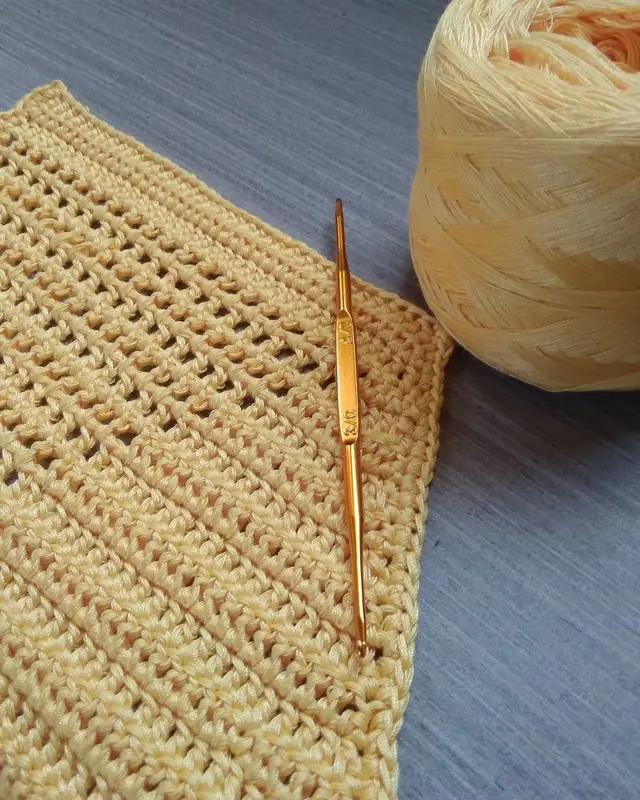
Search for beginner amigurumi patterns. Pick one with a photo of each step. Use smooth yarn in a light colour, so you can see your stitches. Dark yarn hides them.
A word that travels
Crafts pick up names as they cross borders. Crochet comes from a French word for hook. Amigurumi comes from Japanese. The women who make our animals use the same basic move as crocheters everywhere: a loop pulled through a loop.
Amigurumi is a handy word when you search for patterns. You do not need it to enjoy one.