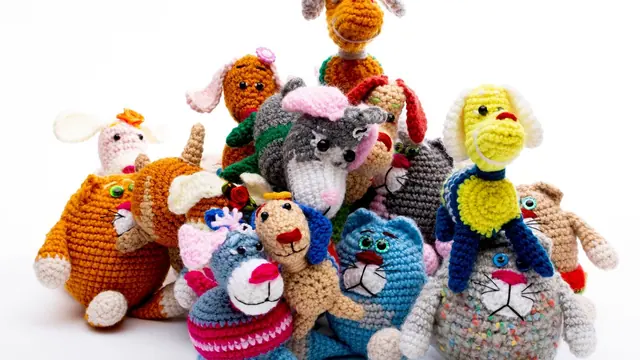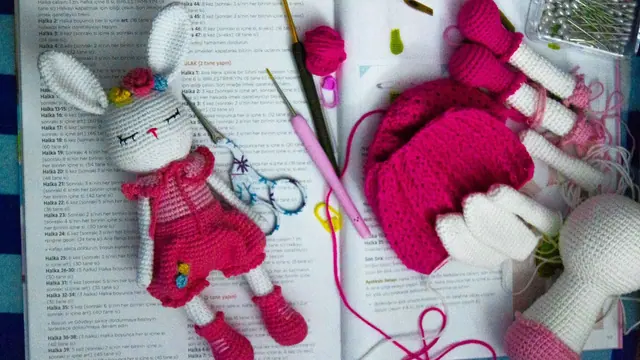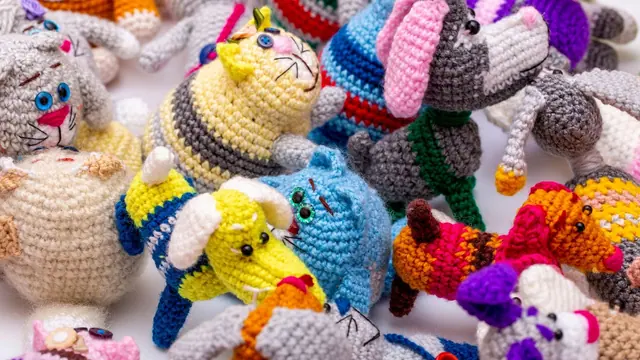

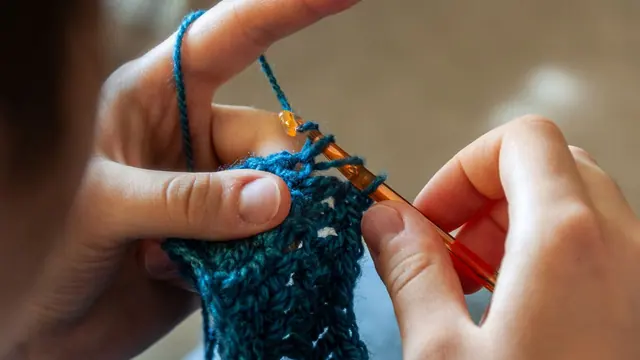
Crochet looks hard until you see the first move. You hold a hook, make a loop, and pull another loop through it. Everything else is that move, repeated in a pattern. A doily and a lion start the same way.
The first loop and the chain
A crocheter starts with a slip knot on the hook. She pulls a new loop through the first one. That makes a chain stitch. Repeat it and the chain grows, one loop at a time. The chain is the base for the rows or rounds that follow.
One live loop
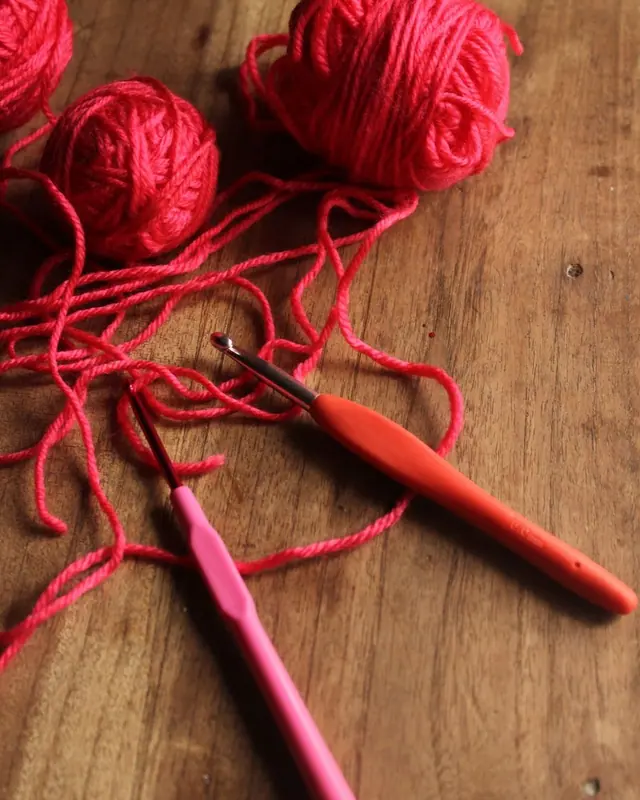
Here is what sets crochet apart from knitting. In most crochet there is only one live loop on the hook at a time. Knitting keeps many loops open on a needle. In crochet each stitch is held by the stitches beside it. So a slipped stitch is usually easier to fix.
Rows and rounds
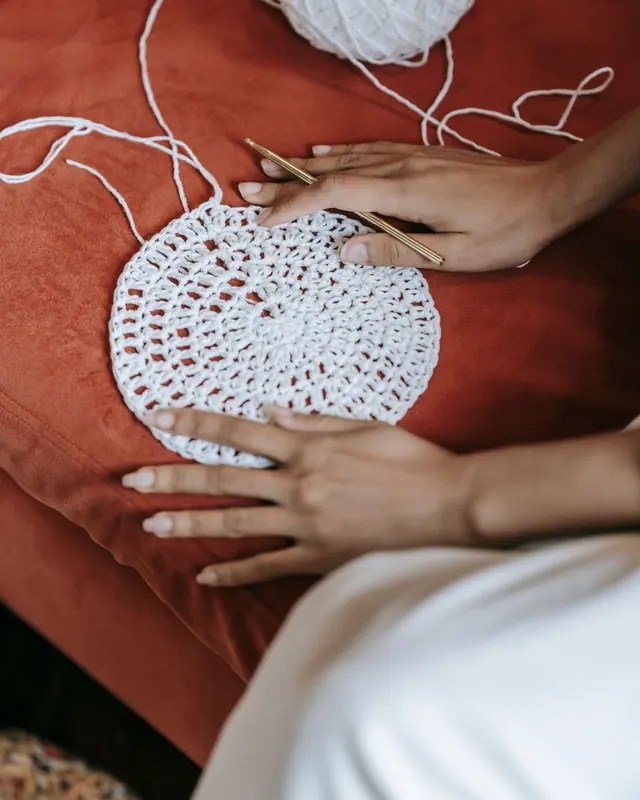
You can make fabric flat, in rows that go back and forth, like a scarf. You can also make it in the round. Rounds make tubes, discs and balls. Crocheted animals are mostly built from rounds, because heads, bodies and legs are round shapes.
In a spiral, you keep going round without joining each circle. In joined rounds, you close each circle and start the next.
Hook size and tension
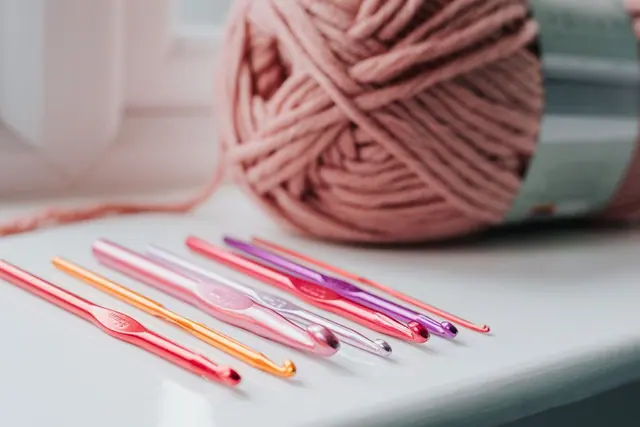
The hook sets the size of each stitch. Thick yarn needs a big hook. Every crocheter also has her own tension, which is how tightly she holds the yarn. Patterns often give a count of stitches across a small sample. If your sample is too big or too small, you change the hook size.
Where crochet comes from
The name comes from a French word for hook. Where the craft began is not settled. People have offered several ideas, and none has been proved. The earliest printed instructions that use the word crochet appeared in a Dutch magazine in 1823.
Before the nineteenth century, writers often did not tell crochet and knitting apart. That makes older records hard to read.
Try it at home
You need a hook and a ball of smooth, light coloured yarn.
- Make a slip knot and slide it onto the hook.
- Wrap the yarn over the hook and pull it through the loop on the hook. That is one chain.
- Repeat until you have a chain of ten. Keep each loop the same size.
- Stop and look. Undo it and try again with looser or tighter hands until the chain looks even.
Even loops matter more than speed. Every maker starts here.
Next time you hold one of our animals, find a row of stitches near its base. Run a finger along it. Each loop in that row was pulled through by hand.