
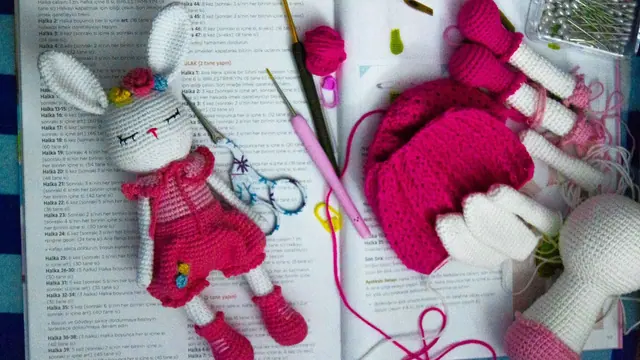
A crocheted animal starts as a few lines of shorthand. They tell the maker how many stitches to make in each round. This post explains in general terms how those lines become a head, a body and legs. We have not published how Mikono writes its own patterns. So we stay with how crochet works in general, and with what our photos show.
What a pattern is
A pattern is a recipe made of counts. Round one might say to make six stitches in a ring. Round two might say to put two stitches in each of those. The numbers go up, so the circle gets wider. Each number is a stitch that somebody makes.
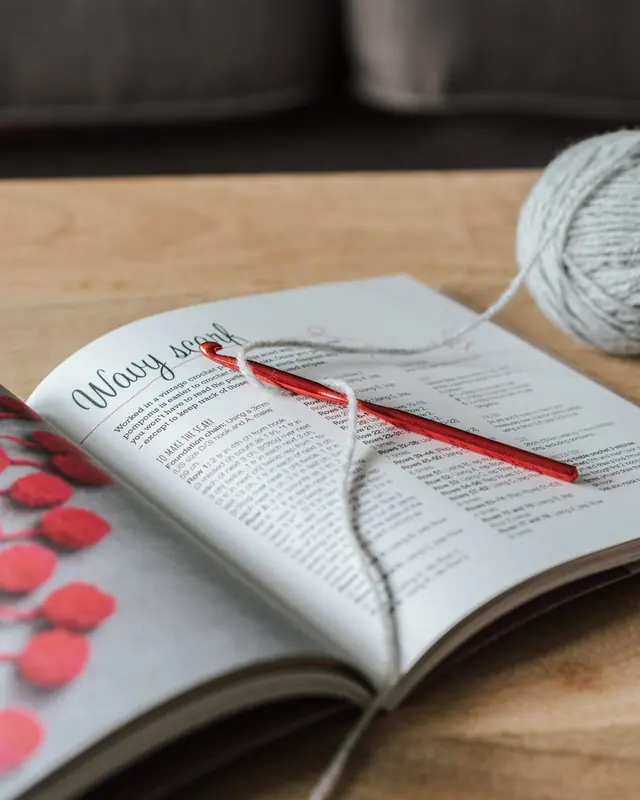
From flat circle to ball
A crocheted disc stays flat because you add stitches in every round. Stop adding, and the sides turn upward to make a cup. Start taking stitches away, and the cup closes into a ball. Widen, work a few plain rounds, then narrow. That is the basic route to a head or a body.
A leg or an arm is a narrow tube. It uses the same count round after round, with no adding. An ear or a horn is a small cone. Most animals are a collection of these shapes.
Made in parts
Working in parts has a reason. A long neck or a thin leg is easier to shape on its own. You can fix one part without undoing the whole animal.
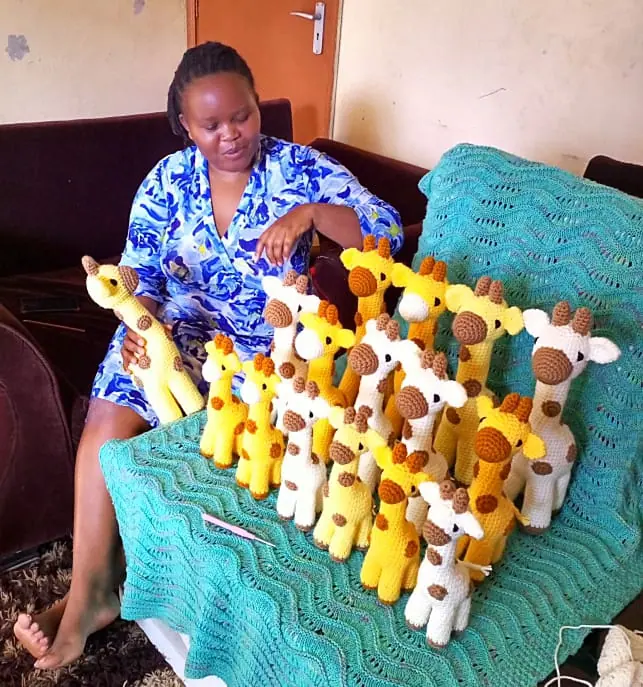
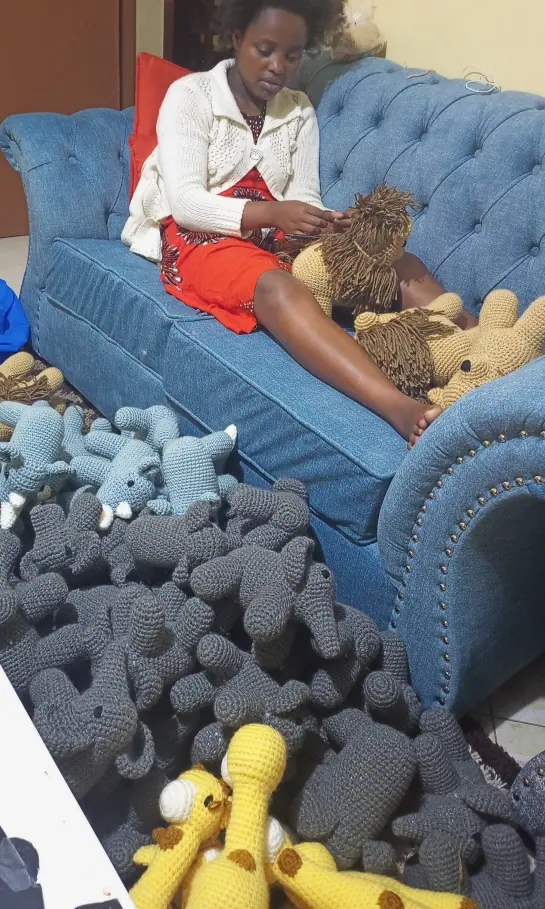
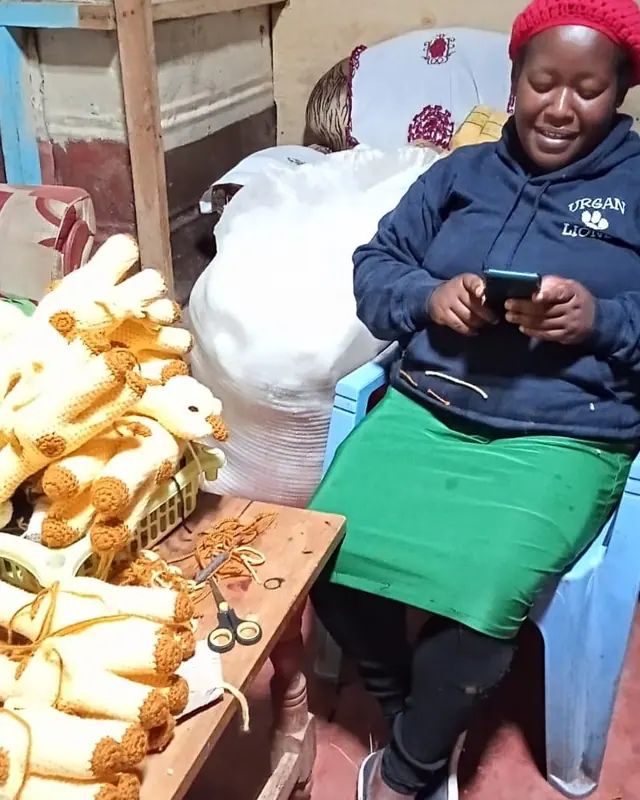
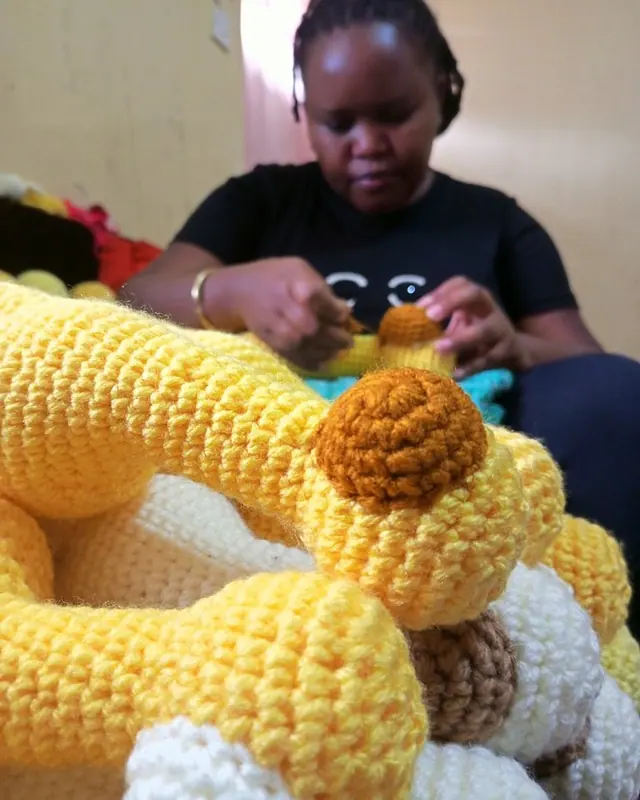
Our photos show this well. Giraffe bodies, horns and muzzles lie in heaps on a table before they are joined. In another photo, a woman sews the face of a tan bear by hand. In a third, a woman trims a lion's mane with scissors. The pieces come first and the details come last.
Tension and filling
- Tight stitches keep the shape firm. They also stop the filling from showing through.
- Even tension matters. A loose round next to a tight one makes a dent or a lump.
- Filling goes in before the last rounds close. How firmly it is packed changes how the animal feels in your hand.
What fills our animals has not been published yet. So we cannot say more about ours.
Joining and finishing
Parts are joined with a needle and a tail of yarn. A careful maker lines up the stitches so the join looks like part of the design. Loose ends are tucked inside. Then the details go on, and any mane is trimmed to length.
We do not say how long one animal takes. We have not confirmed the time, and we would rather leave it out than make up a number.
Next time you pick up a crocheted animal, find where the head meets the body. That seam is where the pattern ends and the animal begins.