
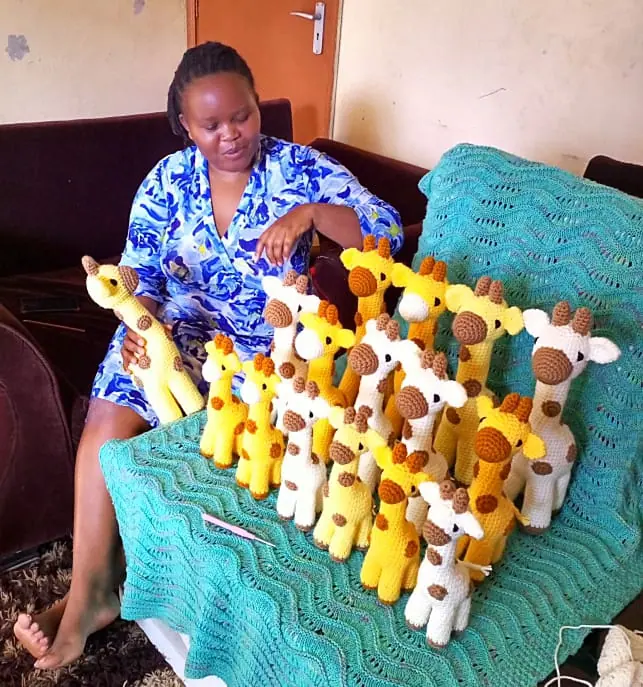
Giraffes are made in parts. Long yellow bodies, round white muzzles and small brown horns are each crocheted on their own. The photos here follow giraffes from loose pieces to a finished group.
Working in parts is common for animals with long necks and legs, because each part can be shaped on its own before the animal is put together. In these photos you can see pieces at each point along the way.
Stage one: pieces on a table
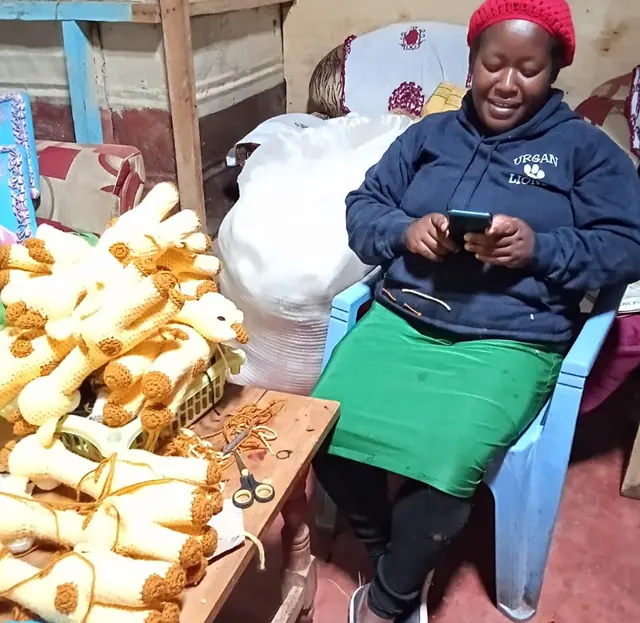
A woman in a red hat and a navy hoodie sits on a blue chair and looks at her phone. Beside her, a wooden table is heaped with yellow and cream giraffe bodies, brown horns showing, with a pair of scissors among them. Breaks are part of the work, and this photo shows one.
Stage two: a giraffe being finished
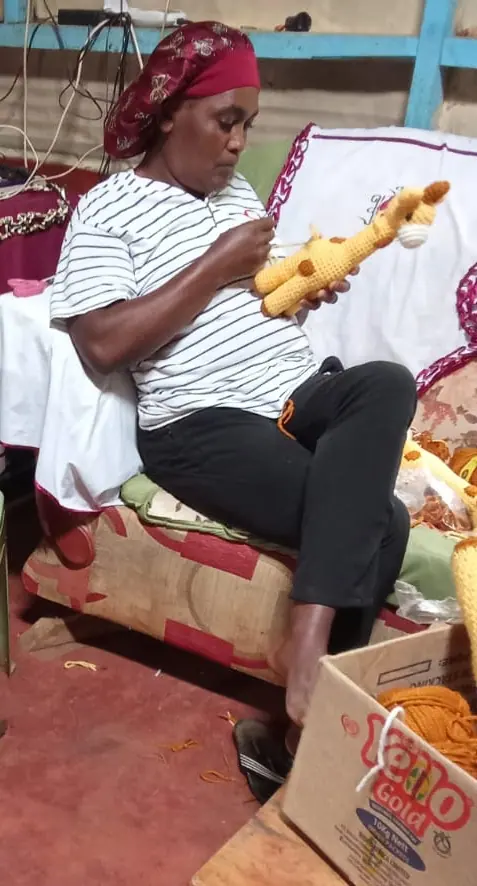
A woman in a striped top and a headscarf sits on a sofa and holds a yellow giraffe that is nearly done, with its spots and horns already on. At her side, a cardboard box holds orange yarn. A giraffe's spots are round brown patches, and on this one they sit evenly over the body.
Stage three: the herd
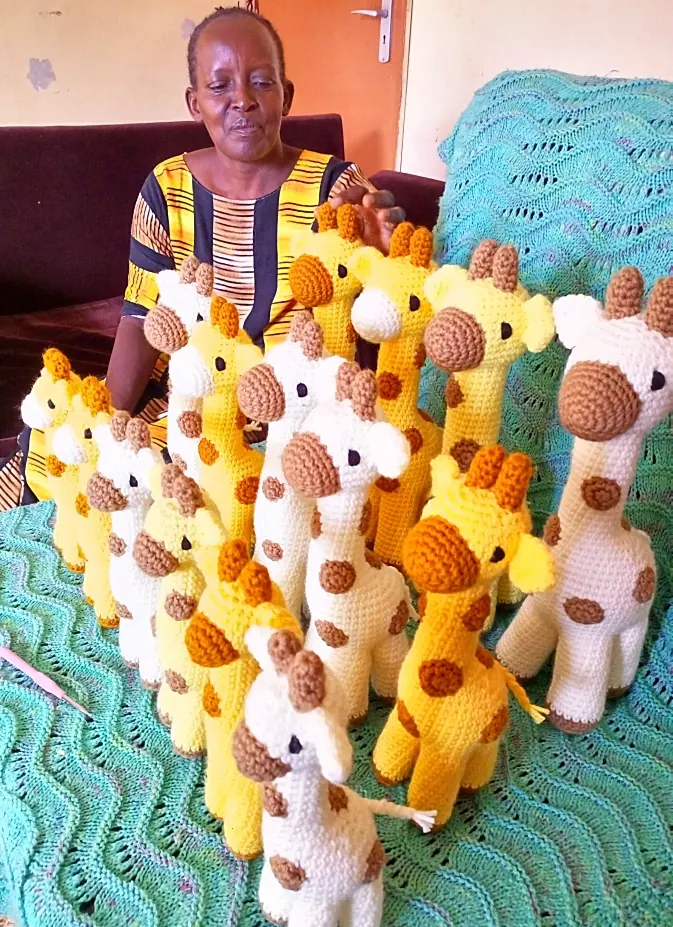
A woman in a striped yellow dress sits behind about fifteen giraffes on a teal blanket. They are yellow and cream, in different heights, with brown spots and muzzles. This is where the pieces end up.
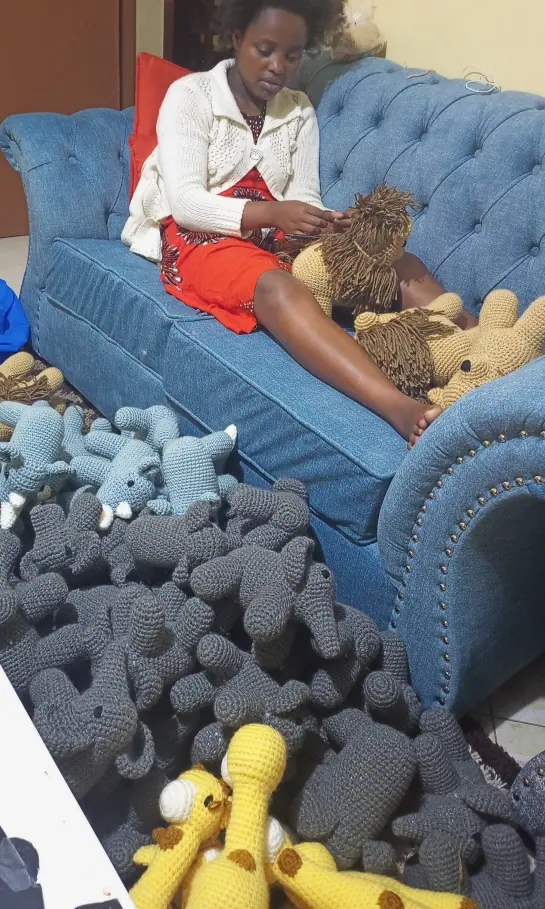
The photo at the top shows another group. A woman in a blue patterned dress sits on a sofa beside a crowd of giraffes on the same kind of blanket, and holds one in her hand.
Look at the faces. Each giraffe has a round white or cream muzzle, two brown horns and brown spots, and those marks repeat from one animal to the next. That repetition is why a crowd of them reads as a family.
Sizes and shades
In both groups the giraffes stand at more than one height and are not all the same yellow. That is what hand crocheted animals look like side by side.
Put the three stages next to each other and you have the whole story: heaps of parts, one animal in a pair of hands, and a family on a blanket.