
A lion is not finished until it has its mane. These photos were taken in a workroom, not a studio, so you see work in progress as it really looks. Here is what to look for.
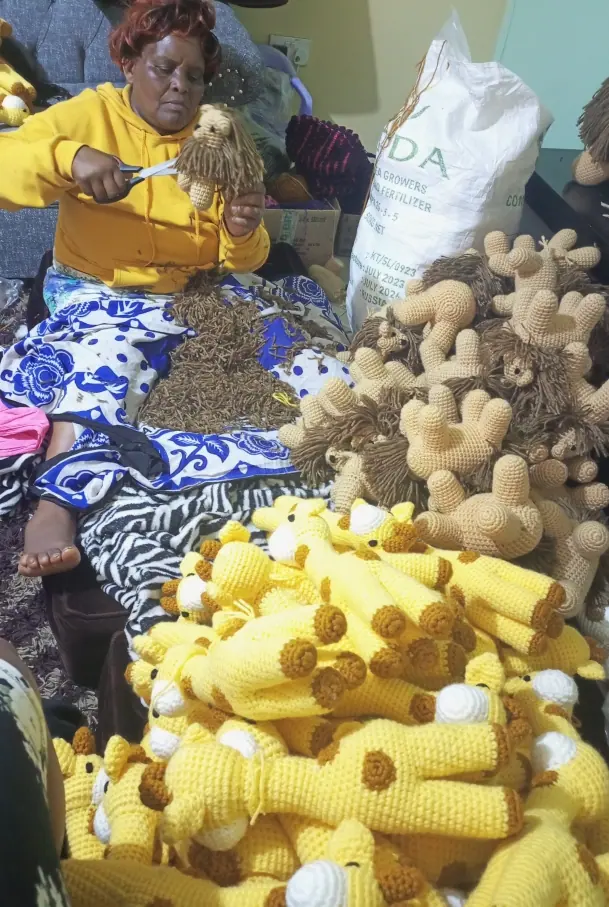
The woman in the yellow hoodie
She sits on a blue and white patterned cloth with scissors in one hand and a lion in the other, trimming the strands of its mane. A tangle of brown yarn strands lies on the cloth in front of her.
The heaps around her
Piles of tan lion pieces sit behind and beside her: round heads with small ears, and short legs. They have no manes yet. Yellow giraffe bodies fill the front of the picture. Many animals are in progress at the same moment, each at a different stage.
The photo at the top
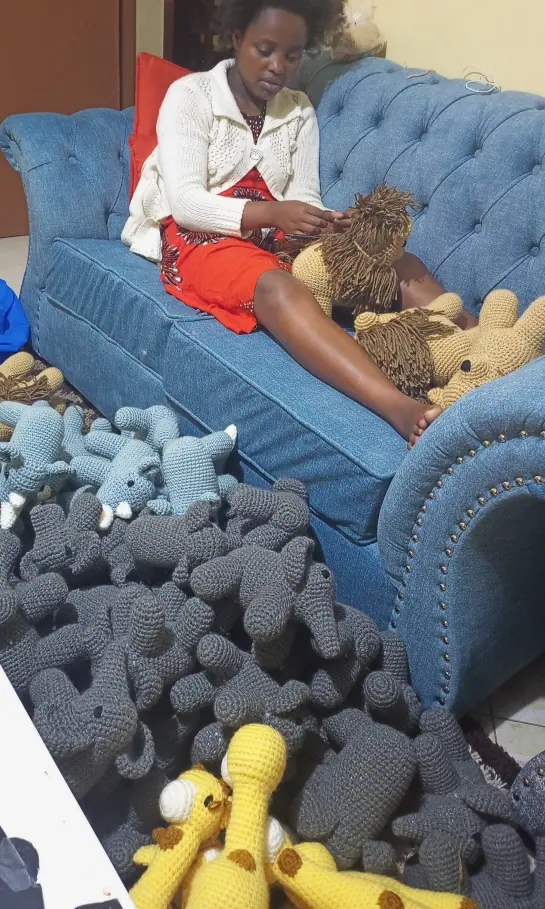
A woman in a white cardigan and a red skirt sits on a blue sofa with a lion on her lap. This one already has its brown mane. In front of the sofa lies a pile of dark grey elephant pieces, with some light blue ones among them.
Look at the face
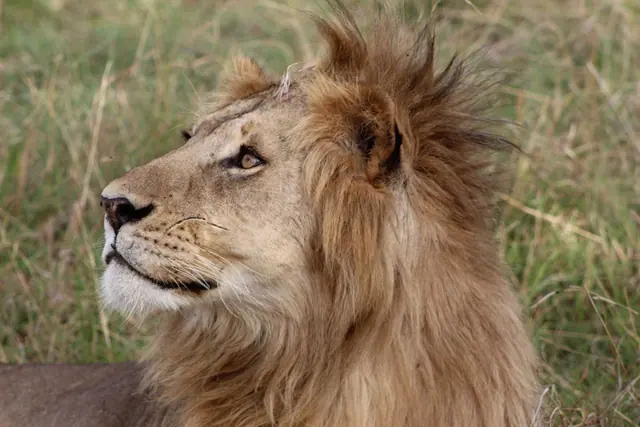
In a close view along a row of our lions, the nearest one shows a tan face with a dark brown nose, small round ears and a mane of brown strands that stops in a straight fringe at the chest. The strands lie down and fall in the same direction, which is what a trim gives them.
What a finished lion looks like
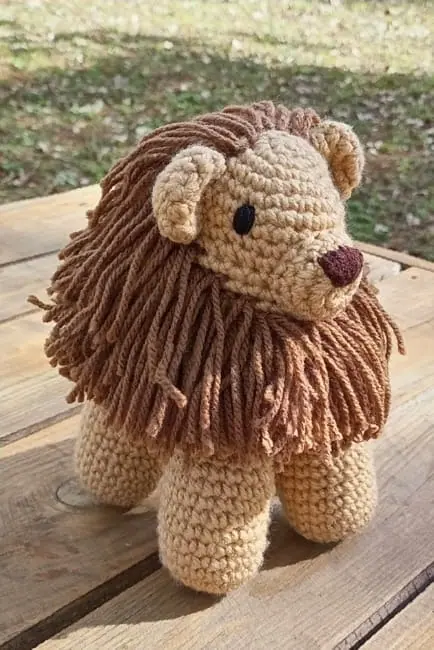
This lion stands on a wooden pallet outdoors. The mane is a thick fringe of brown yarn strands that falls over the chest and shoulders, and the strands are cut to a similar length. The body is tan, with a dark nose and small dark eyes.
How long a mane takes and how many steps go into it are not confirmed yet, so we only describe what the photos show.
If you remember one thing from these pictures, make it the strands. Every one on a lion's mane is a piece of yarn, and the mane around the face is what makes a lion a lion.