
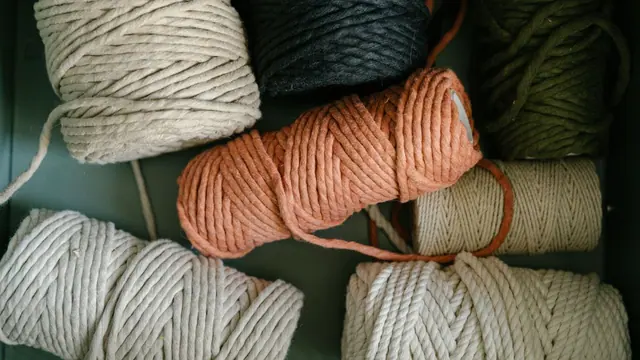
Our animals are crocheted from recycled acrylic yarn. We sum this up in one line: recycled acrylic yarn gives waste materials a new life. A short line can hide a lot. So this post slows it down and says what the line means. It also says where the line stops.
The idea in plain words
Think of a school jumper that passes from one child to the next. It was made once. It keeps a second child warm. Nobody had to make a new jumper for that.
Yarn can work the same way. If yarn already exists, a maker can use it again. Then nobody has to make new yarn for that job. The material stays in use for longer.
People who study waste call this a circular approach. The Ellen MacArthur Foundation lists keeping products and materials in use as one of its main ideas. Reuse, repair and recycling are all ways to do it. Our line is one small case of that idea.
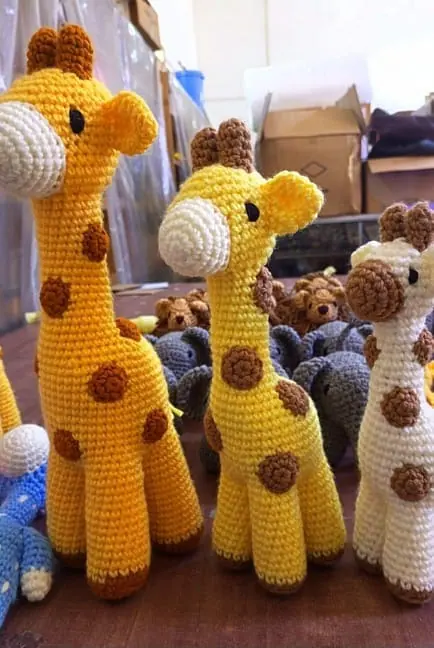
The yellows, creams and tans you see in our photos are the colours of the yarn each animal was crocheted in.
What the line does not say
We want to be clear about the limits.
- It does not say the yarn has stopped being acrylic. Acrylic is still a plastic based fibre, and another post in this journal explains that.
- It does not claim any benefit to the environment beyond reuse. We have not measured one.
- It does not say where each ball of yarn came from. We have not published that yet.
- It does not say waste is gone. Some material was used again. The bigger question of how much gets made is still there.
Why we still say it
A lot of what people buy is used for a short time and then thrown out. We start with material that already exists. A maker in Nairobi turns it into an animal that you can keep for years. That is a small push against waste. It does not fix a big problem. It is a choice a workroom can make, so we make it.
Three questions for any recycled claim
- Ask what was recycled. For us, it is acrylic yarn.
- Ask how much of the product it covers. On our plain animals, all of the crochet is recycled acrylic yarn.
- Ask what is left out. We have not published where the yarn is collected, and we would rather say so than guess.
Use these on any label that says recycled. A seller who answers all three is easier to trust than one who answers none.
Our impact page says what we claim about the women and the materials. It says nothing more than we can stand behind. If a question is missing there, message us. We will tell you what we know. We will also tell you when we do not know.
A second life is a modest promise. We would rather keep it modest and keep it true.